Hiring in the UAE · For employers
Probation and Onboarding Under UAE Labour Law: Getting the First 180 Days Right
Probation rules under the UAE labour law, what employers can and cannot do, and an onboarding structure that turns hires into keepers.
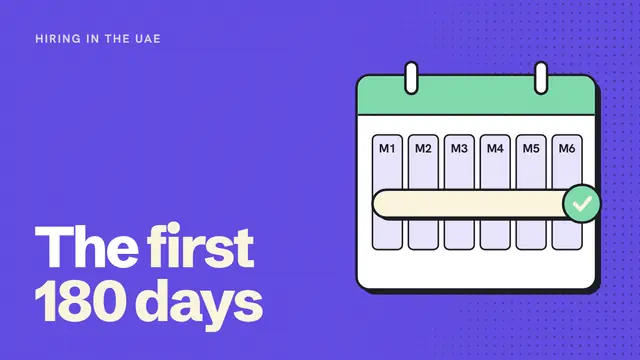
UAE probation is capped at six months, with 14 days’ written notice to terminate during probation — and specific rules if the employee resigns to join another UAE employer. Legally sound probation management plus deliberate onboarding decides whether month seven starts with a keeper.
On this page
The legal frame#
Under Federal Decree-Law 33 of 2021, probation cannot exceed six months or be extended. Termination during probation requires 14 days’ written notice; an employee resigning during probation to join another UAE employer owes one month’s notice, and the new employer may bear recruitment-cost compensation. Verify current provisions via MOHRE.
Two operational details trip employers up. Notice must be genuinely written and dated — verbal probation terminations create disputes that a two-line letter would have prevented. And the six-month cap runs from the start date in the contract, not from visa issuance or "when they really got going"; calendar the decision point when the contract is signed, not when someone remembers.
Set success criteria before day one#
A probation review against criteria never communicated is a dispute waiting to happen. Written 30/60/90-day expectations protect both sides and make the six-month decision evidence-based.
The document need not be elaborate: three to five objectives per period, who supports each, and how progress will be measured. Share it in week one, review it monthly, and both the confirmation decision and — if it comes to that — the termination conversation become straightforward, documented and fair. Employees consistently rate employers higher for having the document, even when the news it supports is bad.
- 30 days: systems, relationships and context absorbed; first small deliverable done.
- 60 days: operating with decreasing supervision; one visible contribution complete.
- 90 days: owning the core of the role; trajectory to full performance clear.
Onboarding is a performance system#
Structured first-week logistics, a named buddy, early meaningful work and scheduled manager check-ins measurably raise first-year retention. The pattern of the first month becomes the pattern of the year.
The checklist version: laptop, access and desk ready before arrival; the manager present (not travelling) in week one; a buddy assigned with an actual mandate; a real task with a real deadline in the first fortnight; and manager one-to-ones weekly for the first month. None of this is expensive. All of it is regularly skipped — and the new hire who spends week one waiting for a laptop has learned something about the company that a year of engagement surveys won’t unteach.
Deciding at the checkpoint#
Treat month four as the real decision point — late enough for evidence, early enough to act within probation. Extending doubt past probation converts a 14-day decision into a full-notice, gratuity-bearing one.
Put a recurring month-four calendar entry on every new hire, owned by HR, with three possible outputs: confirm with confidence, exit within probation, or — the honest middle case — a specific written improvement plan with a firm month-five review. What the checkpoint exists to prevent is the default outcome of no checkpoint at all: drift into month seven with unresolved doubt and a materially more expensive set of options.
Key takeaways
- Probation caps at six months — no extensions.
- Put 30/60/90-day success criteria in writing before day one.
- Structured onboarding predicts first-year retention.
- Decide at month four, not month seven.
Frequently asked questions#
Can we extend probation past six months?
No. Six months is the legal maximum under UAE labour law and it cannot be extended.
Does a terminated probationer receive end-of-service gratuity?
Gratuity accrues with completed service under the law’s thresholds — termination within probation generally precedes gratuity eligibility, but final-settlement rules still apply. Confirm current specifics with MOHRE.
Sources and further reading#
Put this into practice
UAE Gratuity Calculator
UAE end-of-service gratuity worked to the legal formula, with the 24-month cap applied.
4 best HR software platforms for UAE companies (2026)
HRIS, WPS payroll, gratuity and leave management for UAE and MENA employers.
Published 10 October 2026. Read our editorial policy or report a correction.

Nas Talent Recruitment Team
Specialists covering candidate screening, sourcing and employer hiring challenges across the UAE and KSA.